

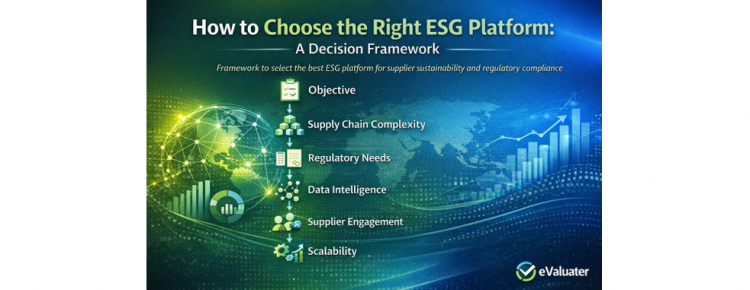
Selecting the right ESG platform for supply chain sustainability requires more than comparing features. Organisations should evaluate platforms based on their ESG maturity, regulatory exposure, and supply chain complexity.
The following framework can help sustainability and procurement leaders identify the most suitable solution.
1. Define Your Primary ESG Objective
Different platforms specialise in different areas of ESG management. Start by identifying your organisation’s primary goal.
|
ESG Objective |
Best Type of Platform |
|
Supplier sustainability assessments |
Supplier ESG rating platforms |
|
Scope 3 emissions tracking |
Carbon accounting platforms |
|
Regulatory ESG disclosures |
ESG reporting platforms |
|
Supply chain ESG intelligence |
Data intelligence and risk monitoring platforms |
Organisations with complex global supply chains often prioritise ESG intelligence platforms that combine supplier engagement, analytics, and risk monitoring.
2. Evaluate Supply Chain Complexity
Your supplier network size and structure should heavily influence platform selection.
Questions to consider:
- How many suppliers are in your supply chain?
- Do you require multi-tier supplier visibility?
- Are suppliers located in multiple regions and languages?
- Do you need continuous monitoring or periodic assessments?
Companies managing thousands of suppliers typically benefit from platforms with automation and scalable supplier engagement capabilities.
3. Assess Regulatory Requirements
ESG regulations are evolving rapidly, particularly in Europe and North America. The platform should support reporting aligned with relevant frameworks.
Common regulatory and reporting frameworks include:
- CSRD (Corporate Sustainability Reporting Directive)
- ESRS (European Sustainability Reporting Standards)
- GRI (Global Reporting Initiative)
- TCFD (Task Force on Climate-related Financial Disclosures)
- Scope 3 emissions disclosure requirements
Platforms that integrate regulatory reporting automation can significantly reduce compliance burdens.
4. Evaluate Data Intelligence and Analytics
Modern ESG programs require more than static supplier scorecards. Companies should prioritise platforms that provide data-driven insights across the supply chain.
Look for capabilities such as:
- real-time supplier ESG risk monitoring
- predictive ESG analytics
- benchmarking across supplier networks
- automated ESG performance dashboards
These insights help organisations move from reactive compliance to proactive risk management.
5. Consider Supplier Engagement Capabilities
Supplier participation is often the biggest challenge in ESG data collection. Platforms that simplify engagement will produce better results.
Important features include:
- automated supplier outreach and reminders
- multilingual questionnaires
- supplier training materials
- emissions calculators and guidance tools
Higher supplier response rates lead to more reliable ESG data and stronger supply chain transparency.
6. Ensure Scalability and Integration
Finally, the platform should integrate easily with existing enterprise systems and scale as ESG programs expand.
Key integration points may include:
- procurement platforms
- ERP systems
- sustainability reporting tools
- risk management platforms
A scalable solution ensures that the platform can support future ESG regulations and expanding supplier networks.
Why Choose eValuater for Supply Chain ESG Intelligence
As ESG expectations grow and supply chain transparency becomes a strategic priority, organisations need more than traditional sustainability scorecards. They require platforms that provide continuous ESG intelligence, deeper supplier insights, and scalable data collection across global supply chains.
eValuater is designed to meet these needs by combining AI-driven analytics, automated supplier engagement, and ESG risk monitoring in a single platform.
AI-Driven ESG Intelligence
At the core of eValuater is its AI engine, which transforms supplier ESG data into actionable insights:
Predictive risk analytics: AI identifies potential ESG risks before they escalate.
Supplier performance trends: Track changes in ESG performance over time across the supply chain.
Automated anomaly detection: Spot inconsistencies or missing data from suppliers automatically.
Decision support: Provides recommendations to procurement and sustainability teams for prioritising interventions.
This AI-driven approach enables organisations to move beyond static assessments and gain a dynamic, real-time view of supply chain sustainability.
Automated Supplier ESG Data Collection
Managing ESG data across hundreds or thousands of suppliers can be resource intensive. eValuater automates key processes including:
- Supplier outreach and reminders
- ESG questionnaires
- Data validation and scoring
- Response tracking and reporting
Automation reduces manual effort while improving supplier participation and data quality.
Enhanced Supply Chain Transparency
eValuater provides multi-tier visibility across your supplier ecosystem, helping organisations identify improvement opportunities and mitigate ESG risks:
- Supplier benchmarking
- ESG performance dashboards
- Supply chain risk monitoring
- Aggregated supplier data across regions and tiers
Scope 3 Emissions and Sustainability Analytics
With Scope 3 emissions increasingly critical to ESG reporting, eValuater helps organisations:
- Capture supplier emissions data
- Model carbon reduction strategies
- Integrate insights into sustainability reporting
Alignment With Global ESG Frameworks
eValuater supports ESG programs aligned with leading reporting frameworks and regulations:
- CSRD
- ESRS
- GRI
- Scope 3 emissions reporting
This ensures compliance with evolving global disclosure requirements.
Strategic Takeaway
The most effective ESG platforms today are evolving beyond simple reporting tools into supply chain ESG intelligence systems that combine:
- automated supplier engagement
- advanced ESG analytics
- regulatory reporting support
- real-time supply chain risk monitoring
Organisations that adopt these next-generation platforms can gain greater visibility, stronger compliance readiness, and more resilient supply chains.
eValuater’s combination of AI-driven insights, automated ESG data collection, and supply chain transparency makes it a next-generation platform. It goes beyond traditional scorecards to help organisations proactively manage ESG risks and opportunities across global suppliers.